


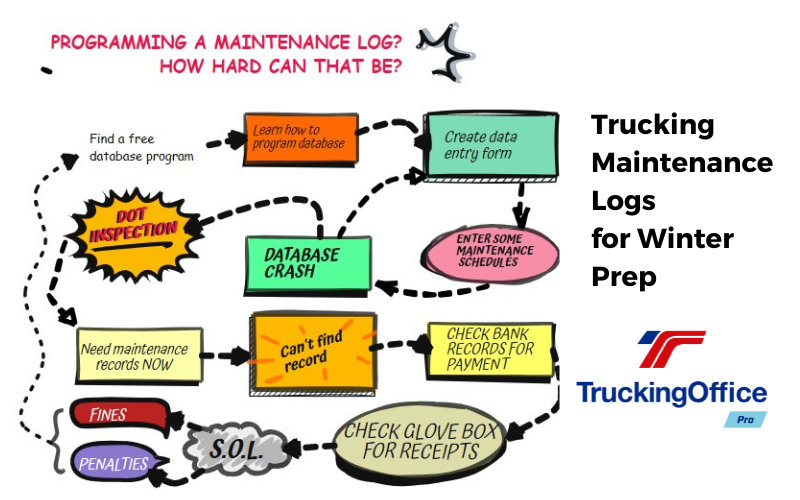
Talking about the weather is boring. But we have to pay attention to the changing seasons in the trucking industry the same way any outdoor business must. Driving loads across the country or even just across the city can be an easy trip or into a blizzard. Truck maintenance is the same. Not exciting to talk about, but it’s critical when we’re talking about the rig that not only produces our income but often shelters us as well. So we have to talk about truck maintenance logs.
Winter prep goes past the rig: see how to winterize your trucking business with a reserve fund and an expense review.
Your maintenance log starts with the daily walk-around. Learn what a DVIR is and what FMCSA penalties apply if you skip it.
Truck Maintenance Logs
A truck maintenance log is the record of every inspection, repair, and maintenance task performed on a commercial vehicle. The FMCSA requires carriers to keep these records under 49 CFR 396.3.
Truck maintenance logs are required by the FMCSA.
Records of all inspections, repairs, and maintenance must be retained. According to 49 CFR 396.3, required records include the following:
- Identifying information of the vehicle, including company number, make, serial number, year, and tire size; (See also, Marking of Self-Propelled CMVs and Intermodal Equipment.)
- A schedule highlighting the type and due date of inspections and maintenance to be performed; and
- Inspection, repair, and maintenance records indicating the date and nature of each.
Carriers must maintain records for each vehicle they control through ownership or lease for 30 consecutive days. These records must be retained for one year at the location where the vehicle is housed or maintained. These records must be retained for six months after the vehicle leaves the carrier’s control (sale, trade-in, etc.).
It’s not just the government. Insurance companies want maintenance logs that record the work done on a rig to be sure it’s not a danger on the roads. These records must be maintained for at least six months, but it’s wise to keep them longer. In the case of an accident, proving that work was done on a cab or trailer might protect the owner from paying out settlements.
Daily Maintenance Checks
A daily maintenance check is the walk-around inspection a driver performs on critical components like hoses and tires before operating the rig.
That daily walk around your equipment when you walk around and check the critical components like hoses and tires is a habit that you should establish. But keeping the paperwork? Is that necessary?
Depends on who you ask. We might suggest that you find a good inspection form online and print it out. Take a picture of it with your smartphone, and you’ll have a dated record of your inspections. Make it part of your routine like your first cup of coffee every day.
Scheduling maintenance is smart.
A schedule highlighting the type and due date of inspections and maintenance to be performed
There’s nothing that compares with planning the regular maintenance. It’s one of the wisest investments you can make. Get the regular work done on your vehicle by the technicians you trust in a timely fashion will be your best investment. Knowing that the techs who change your oil or work on your suspension isn’t just about getting someone local. It’s about creating a relationship with an expert who knows your equipment.
We hate to make this comparison, but it’s a good example. You need a dentist whom you visit regularly and who knows your teeth. A good dentist will see the early warning signs and know when to recommend work to be done (and not just when they need a boat payment.) A good mechanic who knows your rig and its history can recognize the potential problems. Building a relationship with a tech can prevent an emergency roadside breakdown. Scheduling your work with the same tech creates loyalty and confidence.
Miles versus Days
But not all work is done based on the calendar. Some work is scheduled based on miles. Brakes and oil changes might be the best examples of maintenance that fit in this category. Should you just guess when that next oil change needs to be?
TruckingOffice lets you schedule these too.
Maintenance Logs for Winter Readiness
Winter readiness means using your maintenance log to confirm what work is due before road conditions deteriorate, so nothing outstanding follows you into snow and slush.
Getting stuck on the side of the road in the middle of winter always feels worse than the middle of summer, doesn’t it?
As you get your vehicle ready for winter, using your maintenance logs to check what needs to be done before the roads get slushy is a quick way to make sure you get everything done.
it’s not only about the maintenance. Do you need to change the clothing you carry during the winter? Your truck is the same. Whether it’s the diesel additive for cold weather or making sure you’ve got your chains for the mountains, it’s time to clean out the cab, wash the windows, put up fresh drawings from the (grand)kids, and get ready for the rain and snow that are not very far away.
It’s time to make sure your tires are up to the job and you’ve got the winter sleeping bag packed. The last quarter of the year is often the busiest time for truckers. Be prepared for your fall and winter on the road and prepare your truck as well.
Trucking Management Software Must Include Trucking Maintenance Logs
There are trucking software options for just about every part of the trucking business. This program handles dispatches. Another takes care of invoices. IFTA and IRP reports that require repeat data entry. Trucking maintenance record software is out there too. Then there are the truckers who want to handle their entire trucking business on a free platform like Google Docs and Sheets.
TruckingOffice trucking software has had maintenance logs built into the program from the start.
Computers keep track of details, and maintenance records are vital details to track. Whether it’s a replacement that’s based on miles or time, TruckingOffice trucking management software has been keeping track of those tasks along with the vendors who have been handling those repairs for you. Enter the records of your regularly scheduled maintenance tasks and any additional work into TruckingOffice along with the name of the company that handled the work and you won’t lose your mind looking for a receipt from 2024 repair in the 2025 file cabinet! TruckingOffice can find it for you quickly when you need it.
TruckingOffice PRO doesn’t just keep your maintenance records and schedule your future work. Automatic uploads of ret cons and receipts keep you on the road and not stuck at home, filing records and printing invoices.
Frequently Asked Questions About Truck Maintenance Logs
Are truck maintenance logs required by law?
Yes. Truck maintenance logs are required by the FMCSA. Under 49 CFR 396.3, carriers must retain records of all inspections, repairs, and maintenance performed on their vehicles.
What information must a truck maintenance record include?
49 CFR 396.3 requires identifying information for the vehicle — company number, make, serial number, year, and tire size; a schedule showing the type and due date of inspections and maintenance to be performed; and inspection, repair, and maintenance records indicating the date and nature of each.
How long do you have to keep truck maintenance records?
Carriers must keep records for every vehicle they control through ownership or lease for 30 consecutive days. Those records must be retained for one year at the location where the vehicle is housed or maintained, and for six months after the vehicle leaves the carrier’s control through sale, trade-in, or similar.
Why do insurance companies want to see maintenance logs?
Insurance companies want maintenance logs that record the work done on a rig to be sure it isn’t a danger on the roads. In the case of an accident, proving that work was done on a cab or trailer might protect the owner from paying out settlements.
Should truck maintenance be scheduled by miles or by date?
Both. Some maintenance follows the calendar, while other work is scheduled by mileage — brakes and oil changes are the best examples. TruckingOffice lets you schedule maintenance by miles as well as by date.
Get Ready for Q4 with TruckingOffice Trucking Management Software
We’ve got affordable trucking software that handles everything, including automatic rate con uploads and expense receipts uploads. TruckingOffice PRO with TruckingOffice ELog makes your life easier and managing your business smoother by helping you handle your tasks better and faster:
- dispatches
- routing
- invoice generation and tracking
- expense management
- IFTA and IRP
- maintenance
- Trucker Stats™– reports to show the state of your trucking business.
Combined with the TruckingOffice Electronic Logging Device, you’ve got what you need to build a successful trucking business – even from the cab of your truck.
Contact us today to try TruckingOffice PRO‘s free trial to help you avoid loads that cost you money to deliver and to discover what equipment is the most profitable for you.


Recent Comments