


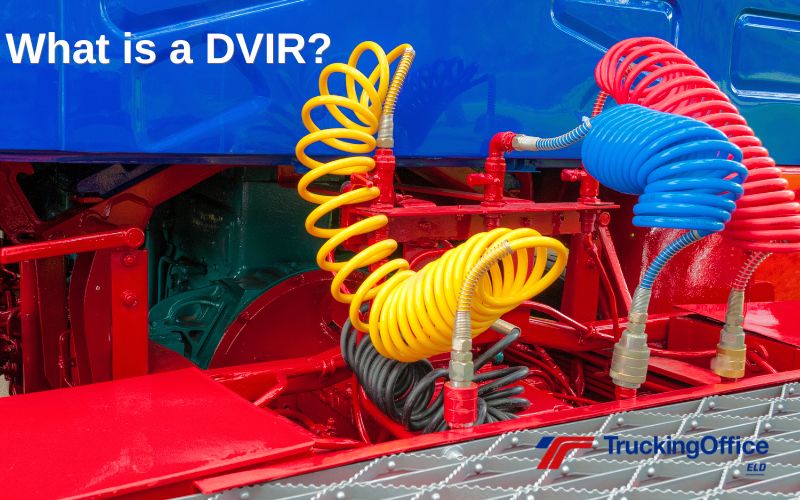
A DVIR is a Daily Vehicle Inspection Report — the daily record a truck driver completes documenting the condition of the rig and any defects found. Every industry has their own abbreviations and codes. In trucking, DVIR is one of many, but it’s one that a trucker should be using daily. DVIR means Daily Vehicle Inspection Report. That daily part means it should be a regular part of the trucker’s routine. What is a trucker looking at?
Your DVIR feeds the bigger record. See what the FMCSA requires in your truck maintenance logs under 49 CFR 396.3.
Your DVIR isn’t the only thing inspectors review — here’s how to check your ELD before a DOT inspection.
Why Daily Truck Safety Inspections Matter
Since the very beginning of motorized trucks, the government has been concerned about the safety of trucks.
A daily inspection of the vehicle remains the first step in assuring that a vehicle is safe on the road. A multi-ton vehicle can become a missile if the brakes don’t work properly. Failing to notice an oil leak can lead to a rebuilt engine that will cost 10s of thousands of dollars. A tire that blows while on the road can lead to an expensive on-the-road repair and delay delivery.
It’s not a waste of time to inspect a vehicle daily. It can feel a bit like overkill. It may look like watching water boil or a plant grow. Do problems just show up?
Some can. The brake hoses can kink and cause issues overnight. A leak in a reefer could lead to spoiled products that would be refused on delivery – and the trip payment canceled by the shipper.
The purpose of a DVIR is to identify vehicle problems as they develop so they can be repaired early, before they become road failures. What does DVIR mean to a trucker? The primary purpose is to identify problems as they develop and repair them early. Remember what your grandmother’s grandmother used to say. “A stitch in time saves nine.” If a problem is identified early, it’s often easier and less expensive to repair. This certainly applies to any on-the-road emergency.
DVIR Forms: Paper Checklist vs Online Lists
Whether you use a paper (formal) checklist or an online list, the important part is to fill it in. Don’t we all know someone who walks around with the list and doesn’t bother to check anything off.
The FMCSA has words for that. It’s called “non-compliant.” The penalties can be significant, from $1,270 up to $15,420 for failure to repair defects. Some drivers think it’s a waste of time and rarely bother. Others keep a printed checklist to review every time.
Regardless of what you choose, keeping records of the DVIR is important. In an inspection, DOT inspectors get very suspicious when nothing is ever reported needing work. Inspectors look for signs that drivers take safety seriously — consistent reports demonstrate professionalism.
Daily inspections are required — and they’re one of the best ways to stay safe and avoid costly repairs. But there are ways to make it easier using TruckingOffice’s ELD.
How to Create a DVIR in TruckingOffice ELD
DOT expects to see these notes. Records of repair. Signatures from techs who took care of them.
It’s a red flag to DOT when they don’t see the DVIR.
So use the TruckingOffice ELD to create a list of the work to be done on your rig. Whether you’re driving for yourself or leased onto another company, the notes made in the TruckingOffice ELD prove that the DVIR is taking place. Adding records to the TruckingOffice PRO maintenance log will show that the driver or the owner is taking care of the rig and making sure that it’s road-safe and ready to haul.
DVIR Frequently Asked Questions
What does DVIR stand for?
DVIR stands for Daily Vehicle Inspection Report. It is one of many abbreviations used in trucking, but it is one a trucker should be using every day. The daily part means completing it should be a regular part of the driver’s routine.
How often does a DVIR need to be completed?
A DVIR needs to be completed daily. A daily inspection of the vehicle remains the first step in assuring that a vehicle is safe on the road, and daily inspections are required. Problems such as kinked brake hoses or a leaking reefer can develop overnight, which is why the check is done every day rather than occasionally.
What are the penalties for not completing a DVIR?
The FMCSA calls a driver who skips the inspection “non-compliant,” and the penalties can be significant. Fines run from $1,270 up to $15,420 for failure to repair defects. Beyond the fine, an unrepaired defect can lead to an expensive on-the-road repair or a delayed delivery.
Can a DVIR be done on paper, or does it have to be electronic?
Either format is acceptable. Whether you use a paper (formal) checklist or an online list, the important part is to actually fill it in. What matters is keeping the records — an electronic option such as the TruckingOffice ELD simply makes the daily list easier to create and store.
Why do DOT inspectors look at DVIR records?
DOT expects to see the notes, the records of repair, and signatures from the technicians who handled them. Inspectors get very suspicious when nothing is ever reported as needing work, because they look for signs that drivers take safety seriously — consistent reports demonstrate professionalism. It is a red flag to DOT when they don’t see the DVIR at all.

Recent Comments