


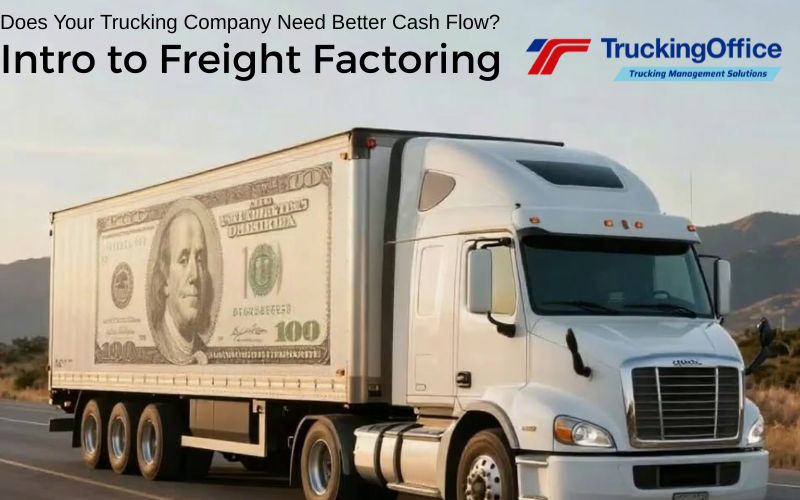
Cash flow may be one of the biggest issues for trucking companies. The upfront costs of hauling freight won’t wait until the shipper sends the payment – if it’s sent on time.
Before you sell an invoice at a discount, check whether the real problem is tracking: how past-due invoices quietly drain trucking cash flow.
Freight factoring is the sale of a delivered load’s invoice to a factoring company, which pays the carrier a discounted value of that invoice up front and then collects the full payment from the broker or shipper. For an owner-operator, factoring turns a net-30 invoice into money that is available now, without taking on debt.
Factors will ask for your operating authority before they fund an invoice — here is what an MC number is and how to get one.
Just because a load has been delivered doesn’t mean that the payment will be made anytime soon. When trucking invoices say they expect payment within 30 days, far too often, that’s a suggestion. That might leave an owner operator crying in their bunks when the money for fuel for the next load isn’t yet paid.
Many truckers need money for fuel and expenses for the next load – not next month. What options does the trucker have? Credit cards? Borrowing from a bank, family, or friends?
The best option might be something else entirely – freight factoring.
Freight Factoring Basics
In simple English, freight factoring is a way to get paid after delivery but before net-30.
Freight factoring is selling an invoice for a completed delivery to a factoring company – a financial institution – that will pay a discounted value of the invoice and take over the billing process, so the payment is redirected to them.
The first thing a trucker needs to do is apply to a company to be qualified for payment. Unlike a mortgage or a car loan, it’s not the driver’s reputation that is being assessed – it’s the shipper and broker that the factoring company will look at. If they have paid on time in the past, it’s likely the application will be approved.
How to Start Freight Factoring
The first step is finding the factoring company that has terms that an owner operator understands and is comfortable with. Looking at several factoring companies for what they offer and what terms they make in a contract can be time-consuming.
Unless a trucker has a regular lane with a shipper, then every factoring application will require individual submission. Build a good relationship with a factoring company by showing up with the correct documents.
- Active Motor Carrier Authority (MC)
- That number on the side of the truck? That’s what the trucker needs, along with current authority status from the FMCSA. If the truck has a federal out-of-service order, then that must be addressed.
- Proof of Insurance – liability and cargo. A factoring company may verify this information before they grant approval.
- Valid Business Entity – either
- LLC
- Corporation
- Sole Proprietorship.
- Valid CDL.
Most factoring companies have specific requirements, so check out their websites early. Establishing a relationship with a factoring company may have long-term implications. The shipper or broker needs to be notified that the trucker is using a factoring company. The payment will be made not to the trucker but to the factoring company. (TruckingOffice PRO has a remit to feature that allows for this.)
What the Factoring Company Looks For
Once a load is delivered and the proper paperwork is in the trucker’s hands, that’s when factoring happens – not before the delivery. That’s why the factoring companies are looking at the brokers and shippers, not the trucker. Evaluating a shipper or broker on
- payment history
- days to pay averages (do they pay on time?)
- FMCSA status
- credit limit or risk score
helps the factoring company decide if they’ll take the invoice.
What does the trucker need to know?
- Will the payment from the factoring company cover the cost of the load? Knowing the cost per mile plus any additional expenses is absolutely vital to answer this question.
- Does the trucker have a good accounting program for invoices that includes BOLs and other expenses?
- What happens if the shipper or broker refuses to pay?
- What restrictions does the contract add? Some contracts have terms that an independent trucker needs to consider.
Having a complete trucking management software that shows a cost per mile without extra data entry is pretty handy, right? It will manage invoices and reports about costs per mile (or per trip) quickly and efficiently – better than QuickBooks (which doesn’t have the trucking company reports needed.)
This all looks complicated. Why would a trucker do it?
Simply put – cash. If a load is delivered and the invoice is emailed that day, it still may be 30 days until the payment is made. By using a factoring service, cash comes back to the trucker far quicker – and the hassles of dealing with the shipper or broker are now the problem for the factoring company, not the trucker.
There are other benefits too.
- This doesn’t impact the trucking company’s credit status.
- Not considered a debt – a trucker’s financial profile isn’t hurt by factoring. Because the work is already done and the invoice is sent, this isn’t a negative.
- Credit management – instead of putting extra charges on a credit card or fuel card (and paying high interest fees) it puts cash in the trucker’s pocket.
There’s a lot more to factoring
Every resource I read about factoring online has different information. Factoring companies may offer a trucker different options and services for an independent trucker or small owner operator trucking company. We suggest you take the time to research any company before commiting to any of them.
Factoring is a great tool to manage cash flow in a business where the pay comes far later than the expenses of the work. There are entire trucking companies that use factoring to manage their cash flow. Others might use it intermittently when cash is tight. For new truckers, factoring is a great stepping stone to building a trucking company. Making the right decisions requires the data your trucking software can provide.
Freight Factoring FAQ
What is freight factoring?
Freight factoring is selling an invoice for a completed delivery to a factoring company — a financial institution that pays a discounted value of the invoice and takes over the billing process, so the broker’s or shipper’s payment is redirected to the factor. It is a cash-flow tool, not a loan.
How does freight factoring work for a trucker?
First the trucker applies to a factoring company and is qualified. Once a load is delivered and the proper paperwork is in the trucker’s hands, the invoice is sold to the factoring company, which pays a discounted value up front. The shipper or broker is then notified to send payment to the factoring company instead of to the trucker.
Does freight factoring hurt a trucking company’s credit?
No. Factoring does not impact the trucking company’s credit status and is not considered a debt, because the work is already done and the invoice has already been sent. That is one reason truckers use factoring instead of putting extra charges on a credit card or fuel card at high interest.
What does a factoring company look at before buying an invoice?
The factoring company evaluates the broker or shipper rather than the trucker: payment history, days-to-pay averages, FMCSA status, and credit limit or risk score. If the shipper or broker has paid on time in the past, the application is likely to be approved.
Do I have to tell my broker or shipper that I am using a factoring company?
Yes. The shipper or broker needs to be notified that payment will be made to the factoring company and not to the trucker. TruckingOffice PRO includes a remit-to feature that handles this on the invoice.
TruckingOffice PRO
TruckingOffice offers the best options for the independent owner operator. We’ve got affordable trucking management software that handles everything, including automatic rate con load entry and expense receipts. TruckingOffice PRO handles
- dispatches
- routing
- invoice generation and tracking
- expense management
- IFTA and IRP
- maintenance
- Trucker Stats™– reports to show the state of your trucking business.
Designed by a trucker for truckers, this complete TMS will streamline all the facets of running an independent trucking company.
Very educative much appreciated