
How does Trucking Business Software Help You Start Your Trucking Business?
The trucking industry is constantly evolving, and many different factors go into an individual’s success. One such factor is the use of technology, which has been steadily increasing over the years. To start your trucking business, you need the right trucking...
Three Keys to Success With Fleet Vehicle Management
Smart fleet vehicle management can help you contain your costs, boost your profits, and keep your people happy. Fleet vehicle management Fleet vehicle management is probably the most important thing that a fleet manager has to track. There aren’t any invoices,...
How to Pick the Best Truck Driver Log App
Looking for any truck driver log app isn’t any easier now than it was 5 years ago when the ELD mandate was put in place. There are still too many bad apps written without the trucker in mind. That’s why we at TruckingOffice decided that keeping the rules...
How to Run a Successful Trucking Company
We all know truckers who don’t make it past the first year. How to run a successful trucking company wasn’t part of the training when they learned how to drive. They make mistakes that cost them their trucks, their finances, and maybe even hurts their...Systems: Steps to Trucking Success
TruckingOffice Wants Truckers to Succeed We’ve been focusing some of our blog posts on goals and goal setting. SMART goal setting SCHEMES to figure out your action plan Measurements to determine where your strengths and weaknesses are Handling the Challenges of...4 Ways Freight Management Software Boosts Your Business
How do you determine which freight management software is the best for you? It’s not a choice you want to make without due consideration. Who wants to buy multiple software packages? Who’s got the money or the time to learn different programs?...Here’s a Look at Recent Trucking Industry Trends
Keeping up with trucking industry trends is a smart move for any professional in our industry. So here’s a look at what’s going on in the world of transportation: Careers in Trucking Studies show the average American truck driver is in his late 40s. This points out...Fleet Maintenance Management
Paul wants to keep on top of his small fleet’s truck maintenance. His boss came down last week with a half dozen unexpected emergency bills that she thought should have been avoided. He wouldn’t argue with that. But managing a fleet of nineteen trucks...See How Easily You Can Thank Your Truck Drivers
I ran a fleet of trucks for a few years. Had a pretty good crew of guys working for me. And appreciated the ways they built my business. Fleet managers have a tough job – they have to maintain that “professional” distance but they want to have a...Starting an Owner Operator Trucking Business: 7 Things You Need to Do Before You Launch
The key to a successful owner operator trucking business is preparation. While this may seem obvious, it’s amazing how often people overlook some of the most important steps in the process. So here are seven tips to keep in mind that will help to ensure your success:...Starting an Owner Operator Trucking Business: Do You Have What it Takes?
Starting an owner operator trucking business isn’t for everyone. It requires a unique skill set, devotion to the transportation industry, and a passion for excellence. So, before investing in truck driver training or quitting your company driving job, ask yourself the...April 30th is Coming Soon! Try Our IFTA Report Software
As a transportation professional, you already know that the April 30th deadline for filing your taxes is fast approaching. What you may not know, though, is that serious penalties await those who fail to turn in their IFTA report on time. Fortunately, TruckingOffice...Here’s the Latest Trucking Industry News: October 2014
Keeping up with trucking industry news is part of being a true transportation professional. With that in mind, here are some of the latest stories from across the country. Con-Way Offers Paid Training in Bid to Attract Drivers One of the biggest challenges facing the...Enforcing DOT Regulations in Your Workplace
Obeying DOT regulations is a key part of succeeding in the transportation industry. The rules of the road, even those you may not agree with, are intended to protect both professional drivers and the public. Breaking them can result in fines, loss of business or...
7 Things Freight Brokers Need To Do To Attract Customers
Freight brokers stand at the very center of the trucking industry. Without a doubt, the majority of trucking freight in the country wouldn’t move off a loading dock unless a freight broker was involved. We here at TruckingOffice respects these...
Are Freight Broker Schools a Good Investment?
Freight brokering is a growing field, and with good reason. Few business opportunities offer its combination of advantages, including high-income potential, flexible hours, and the ability to work from home. Not everyone can be successful in it, though. Being a broker...Trucking Industry Trends
Here’s a question for you: what do your clothes, your soap, your car, your computer, and your sofa have in common? Answer: all of them were delivered by truck to the stores where you purchased them. Virtually everything you’ll find for sale is transported by...Major Trucking Industry Trends and Issues
Every year, the American Transportation Research Institute releases a survey of the biggest trucking industry trends and issues truckers encounter. After polling hundreds of workers,managers, and owners of trucking companies, the ATRI ranks and files all of the...Training: Dispatch Part 3
This training video is part 3 of 3 that cover all the details of entering your first dispatch. This video covers entering the fees and detail...Training: Dispatch Part 2
This training video is part 2 of 3 that cover all the details of entering your first dispatch. This video covers entering a shipper and...Training: Dispatch Part 1
This training video is part 1 of 3 that cover all the details of entering your first dispatch. This video covers entering a customer, driver, and...A Brief Review of DOT Rules and Regulations
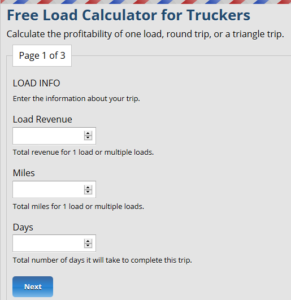
Required DOT Rules and Regulations The DOT rules and regulations are meant to be followed by all truckers and other drivers on US roads. Each state has its own variation of these regulations, but some of the rules are enforced on a federal level. When training or...Free Load Profit Calculator for Truckers
How To Get Your Own Trucking Authority
Get Your Own Trucking Authority
Recent Comments