



When you drove for a transportation company, they took care of the paperwork. The dispatcher assigned your loads, and the accounting department sent the invoices. The compliance department tracked your driver records and vehicle maintenance records. You got a paycheck.
When you start your own trucking business, delivering that first load can make you feel victorious – until you realize that all the paperwork is now your problem. What do you do with the rate con? How do you create an invoice? How do you make sure you get paid?
Surprise! It’s now all up to you!
This is why a new owner-operator needs trucking management software.
What is Trucking Management Software?
Trucking management software (TMS) is a computer program that organizes the information you use to run your trucking business from dispatch to paid invoice.
Instead of a spreadsheet system that uses multiple files for load details, expenses, or invoices, a TMS collects all that data – and more – to streamline your back-office tasks. (That way, you won’t have to try to remember which spreadsheet is hiding your fuel purchases – expenses, load details, or Final Version 4.)
Some companies call their software package “trucking management” or “trucking company software” but don’t offer tasks like IFTA or IRP reports. Others don’t handle invoices or maintenance management.
They’re designed for load management, not business management.
A complete TMS manages loads, produces invoices, tracks expenses, and provides business reports for your company. It will track
- Loads and customers
- Mileage and expenses
- Documents (rate cons, BOL, POD) plus compliance records (driver records, maintenance records and schedules)
- Invoices and payments
- Business reports.
This sounds like what you need to run your trucking company, right?
How Does Trucking Management Software Help a New Owner-Operator?
For a new owner-operator, a TMS provides three immediate benefits:
- It helps you send complete invoices faster.
- It keeps your business information organized.
- It shows you where the money is going.
Invoices and Payments
Every load requires an invoice to get paid. Every invoice packet includes the documents required for payment:
- Rate con
- Bill of lading (BOL) which may serve as the proof of delivery (POD)
- The carrier’s invoice
- Reimbursable load charges and receipts when needed.
When the invoice packet lacks the necessary documentation, that stalls payments. If the rate con says Net 30, the clock may not start until the complete invoice packet is received.
Organize Your Data
Organized data helps you prepare a complete, accurate invoice. All the information in the right place and easy to access speeds up the invoicing process. With a complete TMS, while you’re still in the delivery yard, you can upload the POD and send the invoice from your cab.
It’s not just load information you need to keep organized. Keeping all of your data organized reduces stress when you face inspections or audits. When IFTA comes due, those miles-per-state records and fuel purchase receipts shouldn’t be on napkins or a Wendy’s receipt under the passenger seat. Where is that warranty for the brake job you got last year now that your brakes are wonky?
Not being organized will cost money.
Expenses and Profitability
Tracking expenses and measuring profitability to keep the business solvent are primary tasks of a TMS.
“Where did my money go?” keeps more truckers awake than truck stop coffee. When the cost of fuel has more highs and lows than the West Virginia turnpike, controlling expenses becomes a critical part of running your company.
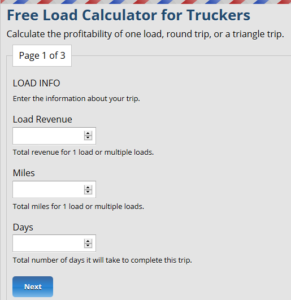
A TMS gives you a deep dive into your expenses. When you see beyond what you’re paying for fuel, you may find opportunities to reduce your cost per mile. Insights into profitable trips and unprofitable loads will help you decide which loads to take and how much to bid. When you’re starting your trucking business, that cost per mile figure is key to avoid taking a load at a loss.
Is Trucking Management Software Worth the Cost?
For new owner-operators, investing in a TMS looks expensive and unnecessary, since they could do the same thing with spreadsheets.
Sure, and you can use Google Maps to route your trips. Just don’t complain when Google didn’t mention that the bridge you have to go under is too low.
Truckers who use a complete trucking software system know that it’s not about the cost. It’s about the value that trucking software for owner-operators gives.
It saves money. You can avoid extra software costs with a TMS subscription that replaces separate programs and calculators for invoicing, expense tracking, maintenance, and business reporting. For example, TruckingOffice PRO and TruckingOffice ELD work together to create IFTA and IRP reports instead of using separate spreadsheets or calculators to prepare them.
It saves time. By avoiding data reentry for IFTA, then again for IRP, and then again for an accountant, a complete trucking software package reuses the data from the original dispatch, routing, expenses, and payments in multiple ways. With an integration for accounting software, it’s a matter of downloading data. Your company’s business reports will be prepared in seconds, not hours. If you need to provide a bank or lender with a profit and loss statement, TruckingOffice PRO and other complete software packages can produce one in seconds.
It saves you from stress. A TMS that tracks maintenance will save the day when a DOT investigator reaches out. The same with an IFTA audit – your fuel receipts will be safely stored along with your miles per state (especially if your ELD and TMS are integrated). Or upload rate cons and expense receipts with your smartphone camera instead of trying to read them by the light of the fuel station pump at 2 AM.
If You’re a New Owner-Operator, Invest in Yourself with Trucking Business Software
Instead of thinking of trucking software as an optional, overpriced expense you don’t need, think of owner-operator trucking software as a tool as important as a tire pressure gauge. You wouldn’t ignore your tire pressure until the truck was stranded on the shoulder. Don’t wait until missing paperwork, overdue invoices, and unknown expenses leave your business in the same position.
Trucking Business Software Simplified
TruckingOffice offers a detailed guide for beginners that will walk you through the entire process of getting started with our trucking software.
We guide you from step one of creating a planned load to sending your first invoice. This means it’s easy for you to get started right away. Once you begin using our trucking software, you’ll be able to stay organized and efficient with our user-friendly features that help your business grow.
If you’re interested, we offer a free trial for TruckingOffice’s complete trucking management software, TruckingOffice PRO. Sign up today to discover how one complete TMS can manage the business behind every load.

Updated August 2026
Software makes easy to manage our fleet with low expense. Simpletrucktax makes filing your E-file Form 2290 more simple than ever before.
Truckers and trucking businesses are the backbone of the United States economy, and their HVUT Form 2290 Tax is widely used