


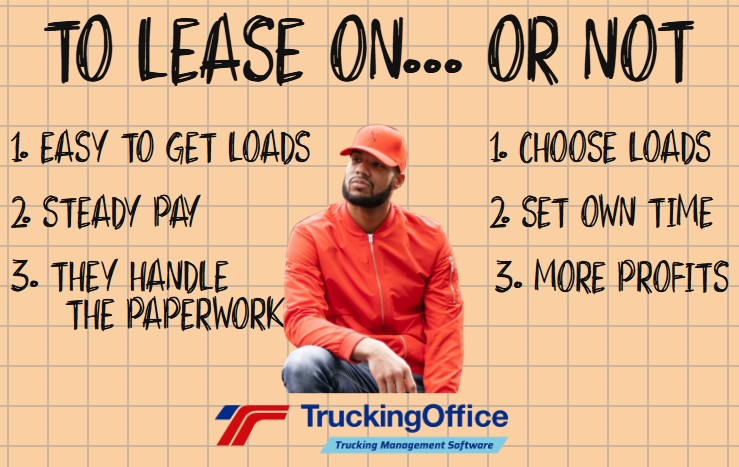
In the last post, we discussed the pro side of the decision for a new owner-operator to lease on to a trucking company. In this post, we take a look at the reasons why the driver would turn down the option.
The short answer: leasing on to a trucking company trades independence for support. A leased-on owner-operator gives up a cut of every load and the freedom to pick freight, and in exchange the carrier handles dispatch, accounting, DOT compliance documents, maintenance records, business reports, IFTA and IRP. An independent owner-operator keeps what the shipper pays and chooses their own loads, but runs the whole back office.
It’s Your Trucking Business
Anyway you look at it, building an independent trucking business requires one thing: a truck. Without the rig, it’s a brokerage, not a trucking business.
Not that there’s anything wrong with that. Brokers are a key part of the transportation industry, but if someone wants to be a trucker, the requirement is a truck.
So how to buy a truck? Lease? Loan? Save up until you’re 60 to pay cash?
Lease Purchase Trucking: How It Works
Lease purchase trucking is leasing a truck from a trucking company with some part of the monthly payment going toward the purchase price. At the same time, the driver is contracted to haul only for the same company, the loads that are assigned, regardless of the pay or time constraints. If there’s one way we don’t recommend that a trucker buy a truck, it’s lease purchase.
Some of these companies have a well-deserved predatory reputation. They build their business on two revenue streams – the lease payments made by the truckers and the freight payments made by shippers. These companies frequently offer low shipping rates to customers by compelling truckers to take the load, regardless of the loss they incur.
We are not saying that all lease purchase programs work like this. Go into a trucking forum and you’ll see people talking about how good the lease purchase program they used was. And then you’ll also see story after story about how lease purchase was the worst financial decision of their lives.
Buyer beware. Lease purchase contracts spell out the details of the arrangement. Make sure you understand every clause in the contract before you sign.
Loans
When a new cab costs over $100,000 and even a used rig starts at $20,000, it’s easy to see that not many people have that kind of cash on hand ot make a purchase. Like cars, truck loans are available. Checking with a local bank or finding a financial institution that focuses on industrial vehicles will produce some options, but it’s not wrong to borrow from family or friends as long as the trucker agrees to make the repayments. (We suggest a contract to protect both the lender and the borrower.)
The average truck loan term varies based on the vehicle’s age and condition and the lender’s confidence in the borrower. The interest rates vary as well. Researching various options will help anyone find the best offer.
After the purchase, then the question of leasing on comes up.
The Trucking Company’s Cut When You’re Leased On
When a trucker is leased on, the trucking company keeps a cut of every load to cover the services it provides. A trucker can instead buy a subscription to a load board and find their own loads — plenty of owner-operators do it — and then they keep the money that the shipper pays (minus whatever a broker gets.) The services that a trucking company provides:
- dispatch and routing
- accounting – invoices and past due account management
- DOT compliance documents
- maintenance records and scheduling
- business reports
- IFTA
- IRP
have to be paid for, after all. But there’s no reason why an independent owner-operator can’t manage all of those tasks with a complete trucking software like TruckingOffice PRO.
Choosing Loads and Rates
With the load board subscription, an owner-operator can select their own loads. Instead of being assigned loads by a trucking company regardless of the profitability, the independent driver has the freedom to choose. Developing relationships with different brokers or shippers can lead to the most profitable loads that never make it onto the listings. If a trucker is leased on, they may not have the opportunities to take those loads.
If a trucker wants to focus on a particular type of trucking, leasing on to a trucking company might not support those plans. Not everyone wants to go on cross-country trips. If an assigned load isn’t one that the trucker wants, the refusal option is important – but what if that load is the difference between making a loan payment or going into default?
The Lease On Questions to Ask Before Signing
Detailed questions to understand the contract can help a trucker make the decision.
- How is the revenue split?
- What fees are charged?
- Can the truck driver decline loads?
- How often is the trucker paid?
- What happens if the trucker wants out of the contract?
Understanding every clause is important to avoid unwelcome surprises.
Is Leasing On a Good Decision?
It can be. To learn business management skills for a trucking company, leasing on is a great option. It gives a trucker time to explore the back office requirements with less stress. By using a trucking business management software, a trucker can track the critical data at the same time that they assure that they are paid what is owed. A year or two with a contract with a good trucking company can stabilize the trucker’s finances during a challenging time.
These days, we see a number of trucking companies that are being investigated for their hiring practices. Before a trucker signs any paperwork, do the research. Talking to truckers who are also leased on to a company will probably give insight to the benefits and drawbacks.
Lease Purchase and Leasing On: FAQs
What is lease purchase trucking?
Lease purchase trucking is leasing a truck from a trucking company with part of each monthly payment going toward the purchase price. In exchange, the driver is contracted to haul only for that same company, taking the loads that are assigned, regardless of the pay or the time constraints.
Is lease purchase a good way for an owner-operator to buy a truck?
We don’t recommend it. Some lease purchase companies have a well-deserved predatory reputation: they earn on two revenue streams — the lease payments truckers make and the freight payments shippers make — and they frequently offer low shipping rates to customers by compelling truckers to take the load regardless of the loss they incur. Not every program works that way. Trucking forums carry good reports alongside story after story about lease purchase being the worst financial decision of a driver’s life. Read and understand every clause before you sign.
How else can a trucker pay for a truck?
With a truck loan. A new cab costs over $100,000 and even a used rig starts at $20,000, so few buyers have that kind of cash on hand. A local bank or a financial institution that focuses on industrial vehicles will produce options, and borrowing from family or friends is not wrong as long as the trucker agrees to make the repayments — put it in a contract to protect both the lender and the borrower. Loan terms and interest rates vary with the vehicle’s age and condition and the lender’s confidence in the borrower.
What does a trucking company do for its cut when you lease on?
The carrier keeps a cut to cover the services it provides: dispatch and routing, accounting including invoices and past due account management, DOT compliance documents, maintenance records and scheduling, business reports, IFTA and IRP. There’s no reason an independent owner-operator can’t manage all of those tasks with a complete trucking software like TruckingOffice PRO.
What questions should a trucker ask before signing a lease-on contract?
Ask how the revenue is split, what fees are charged, whether the truck driver can decline loads, how often the trucker is paid, and what happens if the trucker wants out of the contract. Understanding every clause is important to avoid unwelcome surprises.

Recent Comments