


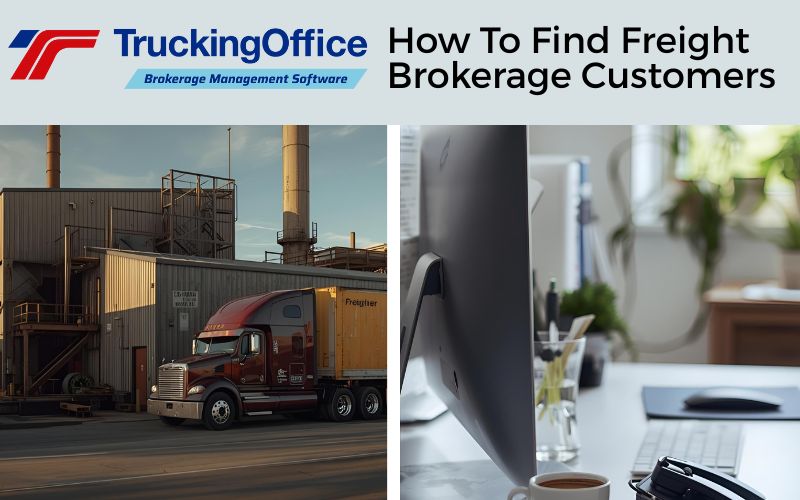
Starting out in a freight brokerage business can be difficult. If a new broker doesn’t have a good network of potential shippers, it’s a huge challenge to build a business. So how do new brokers find freight shippers?
Carriers face the same challenge from the other side of the load — here is how to find shippers for your trucking company without a load board, including the referral approach that built one of our founders a brick-hauling lane.
It’s often about who you know.
Freight brokers find shippers by working their local market first: identifying the manufacturers and producers in their own community, getting introductions through the mayor’s office, the Chamber of Commerce or the Rotary Club, using LinkedIn to find the person who actually books the trucks, specializing in a niche trailer type, and asking their own personal contacts for referrals.
Local Freight Brokerage Customers
Local shippers are the easiest first customers for a new freight brokerage, because small manufacturers and producers are often overlooked by bigger brokers and can be reached in person. Wherever you live, there will be a business producing goods that need to be shipped. The question is – who is moving their freight? How are they finding reliable truckers?
That’s the sweet spot for the freight broker. A broker will find the right driver, right trailer for a shipper who doesn’t have much experience in the trucking industry. By pairing up a trucker and a shipping customer, a freight broker proves their worth.
But getting to know potential customers can be difficult. How does a freight broker break into the field?

Working In Logistics as a Freight Broker
Get the proper training in the brokerage field and work for another freight brokerage company is a solid way to experience the challenges. Freight brokerage can be demanding. An ability to multi-task isn’t optional. Tracking shipments – in inclement weather and during the orange barrel season – takes a sharp mind and quick reflexes when things go south.
Finding freight shippers doesn’t have to be all grind. Sometimes you’ll find shippers in your own backyard.
Small Companies Need Trucks, Too!
Even in rural USA, there’s freight to be hauled. How does a broker find it?
It’s all about the network. How do the people around that community know each other?
Chamber of Commerce? Rotary Club?
Start with the mayor’s office.
Any mayor wants to build up the industry in the community. A key component of that industry is shipping. The local government will know the companies and probably even the business owners. Learn those names and find a way to get an introduction to them. Keep your outreach professional — social media can be a great way to make genuine introductions. When a small business needs a truck driver, they may be overlooked by other brokers. Provide the best possible service, transparency, and reliability and your reputation as a freight brokerage will sell your services.
Find Shippers on LinkedIn
Business social media like LinkedIn is a great place to find who you need to talk to. It’s not always the business president who makes the shipping decisions. The shipping department may be a crew of four or fourteen. The person in charge of finding truckers could be an admin in a back office or the person riding around in a golf cart in a warehouse. The receptionist who answers the phone might not want to give you that name, but it’s worth a call, right? It may take a personal visit to meet that person, but a personal introduction may be the foot in the door that a new broker needs.
Find Your Niche as a Freight Broker
A freight broker niche is a deliberate focus on one kind of freight or trailer — reefer, oversize, or regional — so shippers with that specific need come to you first. There are always specialty loads that require specific trailers. If a food cold packer has a load of frozen food, they’re not looking for a flatbed trailer to haul the load. Choosing to focus on one type of shipments – reefer, oversize, regional – isn’t a limit on your income. It can be a good way to find shippers who are frustrated on load boards when truckers who don’t have the rig the shipper needs try to take the load. Specialty loads often are paid more than just the usual van shipment.
Work Your Own Contacts
At a luncheon today, I met a trucker’s wife. Finding people in our own lives and letting them know who we want to meet is a simple and startlingly effective way to meet people in our own communities. The social network isn’t just online. People know people and most of us are glad to pass along a reference. Be a good neighbor and see what your neighborhood can offer you.
Especially if you pass out the good candy on Trick Or Treat night.
Keep Track of Freight Brokerage Customers
Freight brokers keep customers by staying in regular contact between loads, not just when a load is booked. Once you make a connection with a shipper, keep in touch with them. Remember the details – kids’ names, dog’s health – and be a decent human being. When you hear about a success, a complimentary email is nice. It doesn’t need to cost much to drop a card in the mail when you see their name in the local paper. Make the effort to keep in regular contact to find out their future trucking needs is a great way to keep a customer. Instead of the constant search for new customers, keeping valued old customers can lead to a long term profitable relationship.
Using TruckingOffice Brokerage software will help you keep all those contacts organized. Give it a try with a free trial today to discover what a dedicated brokerage software can do to build a strong freight brokerage business.
Freight Brokerage Customers: Frequently Asked Questions
How do freight brokers find shippers?
Freight brokers find shippers by working their local market first. Identify the businesses near you that produce goods, ask the mayor’s office, Chamber of Commerce or Rotary Club for introductions, and use LinkedIn to find the person who actually books the trucks. Personal referrals from your own network are often the fastest way in.
Where do new freight brokers find their first customers?
Usually in their own backyard. Even in rural areas there is freight to be hauled, and the small companies that need trucks are frequently overlooked by other brokers. Local government offices know the companies and often the owners, so start there and ask for an introduction.
Should a freight broker specialize in a niche?
Yes. Specialty loads require specific trailers, and a frozen food packer is not looking for a flatbed. Focusing on reefer, oversize or regional freight is not a limit on your income. It helps you reach shippers who are frustrated on load boards by truckers without the right rig, and specialty loads often pay more than a standard van shipment.
How can a freight broker use LinkedIn to find shippers?
LinkedIn helps you identify who actually makes the shipping decision, which is often not the company president. The person in charge of finding truckers could be an admin in a back office or a supervisor out in the warehouse. Find that name on LinkedIn, then follow up with a call or a personal visit.
How do freight brokers keep the customers they win?
By staying in touch between loads. Remember the details about the people you work with, send a note when you hear about a success, and make regular contact to learn about their upcoming trucking needs. Keeping valued customers is more profitable than constantly searching for new ones, and brokerage software keeps those contacts organized.

Recent Comments