Trucking Fleet Maintenance Software: 5 Priciest Things to Maintain

Over time, the five most expensive truck costs are fuel, tires, brakes, batteries and oil changes. Trucking fleet maintenance software helps owners and companies keep up with routine maintenance, reduce costs and increase profits. Although this might not be a major issue for a single operator/owner, people with two or more trucks find small things slipping by until they get an expensive wakeup call. Having a tire or battery replaced in town is not a major expense; however, a service call 150 miles down the road or a 75-mile tow into the nearest town increases these normal costs substantially. Between your constant vigilance as an operator and our sophisticated, user-friendly online trucking software, these problems and costs can be avoided.


Top Five Ongoing Truck Expenses

1. Fuel. Buying cheap fuel at out-of-the-way places may damage sophisticated diesel motors. Always opt for the better, clean-running fuel, even though it may be a bit more expensive. Yes, several cents extra per gallon adds up, but when compared to the cost of repairing your clogged engine after using cruddy fuel, it’s well worth it. One of the best ways to save on fuel costs is to match the tractor to the job; if the sleeper cab is not needed, eliminating the 500 pounds of deadweight increases fuel economy. The second is to match tire tread to the road type to improve your fuel efficiency on long highway drives.

2. Tires. Check your tires daily for signs of wear or damage to reduce the risk of blowouts or flat tires between towns. Monitor the air pressure in each tire at least weekly.

3. Brakes. Accidents caused by brake failure can be among the most expensive repair costs. Check your brakes regularly, and listen for any grinding or squealing.

4. Batteries. Checking your battery periodically with an amp tester can alert you to future and potentially expensive problems.

5. Oil. Routine oil changes keep your big diesel rigs purring, and prevent you from having to shell out wads of cash to repair an engine that’s been running on bad oil.


Trucking fleet maintenance software virtually replaces a full-time maintenance manager. This inexpensive program keeps track of each truck, whether the company has 5 or 105 big rigs, crossing the United States, Canada, Mexico and South America. The easy-to-use system updates each truck log every time any information is put into the system. Fuel-up receipts, mileage checks at the cargo delivery point—each of these is entered in an individual truck’s log. This careful recordkeeping help you know when maintenance is required for each particular rig.


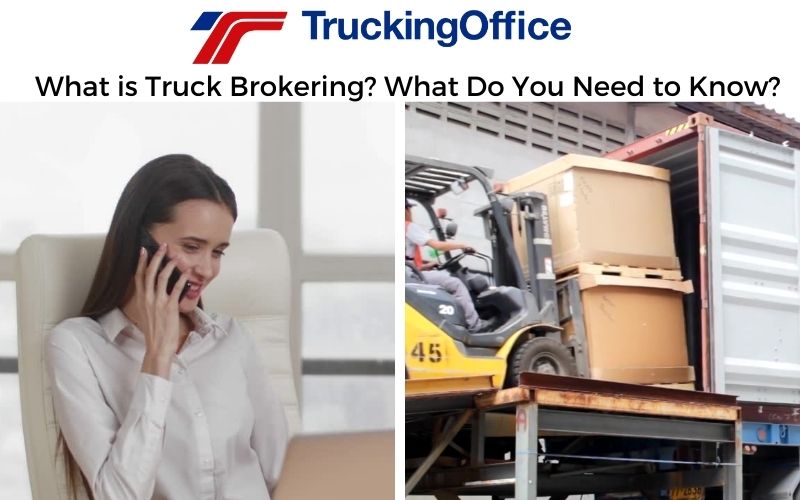
What is Truck Brokering? What Do You Need to Know?

Truck brokering maximizes the money made in freight hauling by allowing trucking companies to negotiate cargo hauling with other freight companies. Truck brokerage software makes this process easy. Any owner interested in expanding his or her business should learn a few things to start this lucrative addition to freight hauling.


Why Become a Truck Broker?

So you get a call for a big load—great! The problem is, all of your trucks are already on the road with other loads. Thinking about all the revenue you could have gotten from that load? This is where truck brokering (or freight brokering) comes in. If you have a brokerage license from the FMCSA, you can sub that load out to another trucking company, and take a small commission. Typically, a trucking company can only negotiate their own freight, which gives them a two-part opportunity cost: the lost job itself, and the brokering fee they could have gathered for arranging alternate cargo delivery. So how do you get a brokerage license?


Requirements

You don’t have to take an exam or background check to receive your freight brokerage authority, and there is no age limit. First, you’ll need to obtain a proof of insurance of $10,000, in the form of either a surety bond (obtained through an insurance company), or a trust fund.

When you have this insurance, you can fill out and send the Federal Motor Carrier Safety Administration’s OP-1 Application for Motor Property Carrier and Broker Authority, along with a $300 (non-refundable) application fee. You should also fill out the BOC-3 form, which designates your process agent, or legal representative.

After submitting your application, wait for the FMCSA to issue you an MC, or motor carrier number. This number will allow you to start brokering loads. It’s especially easy to add a brokerage authority to your company if you already have a trucking authority.


What Truck Brokerage Software Does

TruckingOffice has recently released a new version of our software that caters specifically to truck brokerages. Eliminating some of the unnecessary functions, like maintenance records (since brokers are not in possession of a brokered load at any time), this truck brokerage software is streamlined to help you focus on the important parts. It will help you to keep your brokerage and regular trucking loads separated, especially in terms of financial records. This tool is geared towards organizing histories, both of loads and of customers, to allow you to access past information quickly. Same core product, different features—so it does exactly what you need it to.


Using truck brokering to increase revenue is just smart business. Our user-friendly truck brokerage software helps you to grow your business in an organized fashion.


Safety Tips for Truck Drivers

By using nine good motoring habits, truckers can continue to ride the highways in a safe manner. After all, no one wants to add the information of a truck accident to their financial or DOT records, even if they have easy-to-use, online truck expense management software.


9 Safety Tips for Truck Drivers

1. Get enough rest. If you feel drowsy, pull over and take a nap. Don’t risk driving while sleepy.

2. Slow down in work zones. Lanes are often moved or redirected during construction; adjust your speed so you can follow the provided signage without endangering yourself, other drivers, or the workers.

3. Be aware of your blind spots. Small cars can be easily missed. Signal your intention to change lanes or turn well in advance, so that cars have enough opportunity to get out of your blind spot. You might also invest in extra side mirrors to improve visibility.

4. Maintain a safe distance from the cars in front of you. It will take you much longer to stop than an average car.

5. Regularly check your brakes. There isn’t always a convenient runaway truck ramp nearby to catch you if your brakes go bad.

6. Follow suggested speed limits.

7. Avoid aggressive drivers. This will help you fulfill tip #6. Don’t get caught up in road rage scenarios; antagonizing aggressive drivers will only escalate the situation.

8. Always, always, always wear your seat belt.

9. Beware of the effects of prescription and OTC drugs; many medications make you drowsy.

By making these suggestions habits, truckers can avoid getting personally acquainted with highway patrolman, accident lawyers, insurance auditors and DOT representatives. Instead, these dedicated freight movers will enjoy the camaraderie of other truck drivers, rest stop acquaintances and happy freight companies.


Trucking Industry Statistics

Over the past two decades, truck accidents have increased 20% and 1 truck driver out of 20 is involved in an accident every year. The Federal Motor Carrier Safety Administration claims that driver errors cause 10 times more accidents than any other reason. Action or inaction is credited for 88% of collisions. In a report the FMCSA released in 2006, the top four causes of these mishaps were prescription drug use (26%), traveling too fast (23%), unfamiliar roads (22%) and over-the-counter drug use (18%). According to these trucking industry statistics, even something as innocent and commonly used as cough syrup impacts drivers’ reactions.


The best way to avoid becoming part of these trucking industry statistics is to be alert, be aware and be conservative. Drivers have their hands full handling the tons of equipment and cargo they move. By adopting these nine safety tips for truck drivers, they can avoid becoming the 1 in 20 drivers with an accident on his or her record.


How to Ace the DOT Safety Audit

Fleet operators can spend their time keeping trucks rolling or dealing with the complex and confusing DOT Safety Audit requirements. Of course, every operator knows what happens if trucks or businesses do not comply or pass: bye-bye business! There is an easy way and a hard way to deal with these endless government oversights. Trucking operators can do it by hand, or they can use an amazing, inexpensive software system to handle minute details. Specially designed trucking software makes life easier by tracking business, managing schedules and compiling reports to help you improve your DOT Safety Audit compliance.


What DOT Safety Audit Software Does

Excellent truck dispatch software tracks each vehicle, driver and cargo from the time the order is placed until the trailer is delivered. Not only does this easy-to-use system create invoices, it also tracks the mileage in individual states and drivers. Required maintenance, safety checks and trucking fees are automatically loaded into the program; to-do reminders reduce unwelcome surprises and heavy-duty tickets and fines to make complying with the DOT rules and regulations easier than ever. Required information includes federal tax ID numbers, gross revenue for the last financial year, total fleet mileage for the last 365 days, proof of insurance and a complete list of all drivers who operated vehicles 26,000 GVW and above. Drivers’ information is detailed with the dates of hire and termination, driver’s license number and the issuing state, as well as the results of random drug tests. Some trucking managers spend hours assembling all of the required documents; they locate files, copy information, calculate mileage and verify the data. With the right software program, though, all of the information for your DOT safety audit and more can be accessed and printed out with just a few clicks of the mouse.


DOT Safety Audit representatives are more likely to trust information that is obviously well organized and maintained. After all, TruckingOffice’s truck dispatch software manages financial records as well. Every time cargo is delivered, there is an accurate record of mileage, driver, income, and expenses, including maintenance items and truck repairs. This data is easy to locate quickly and can be printed with the click of a button. Best of all, businesses can verify all information provided.